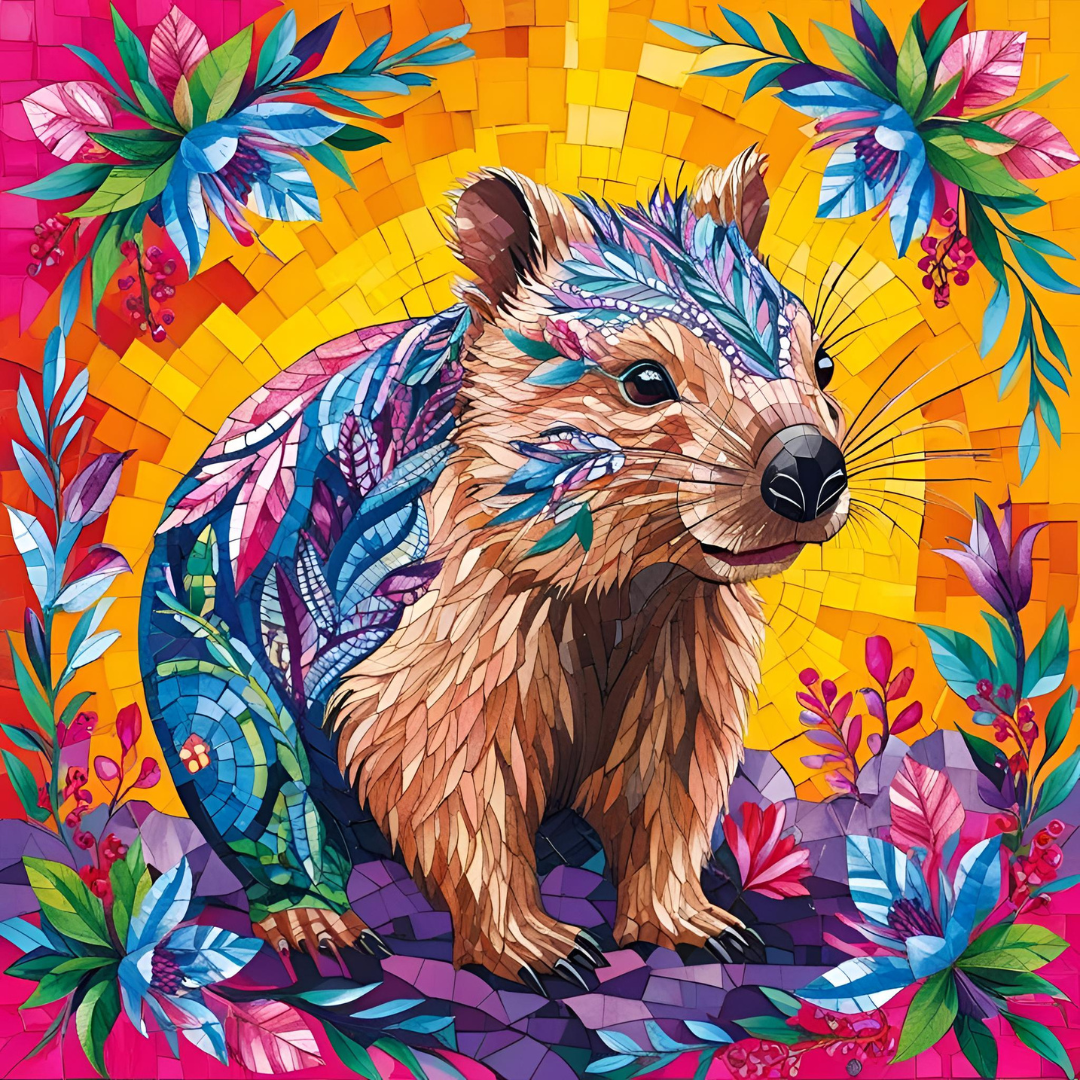
Estrangement isn’t something you just “decide” one day over coffee. For me, it was a long, quiet survival strategy — as an only child, often the sole witness to an emotionally immature family dynamic, and as someone who finally realized love without protection isn’t enough. I managed to build a life of my own, and still proudly claim the nickname wombat.
My father used to call me wombat.
For a long time, I assumed it was his way of saying, “You’re a little funny-looking, but we’re fond of you anyway.” I mean, look at wombats. They’re stubby, stubborn little marsupials who don’t exactly win beauty contests. So I took it as a mildly affectionate jab — the kind parents make when they’re more comfortable with teasing than tenderness.
It wasn’t until years later, after a lot of hard and necessary distance, that I realized he meant it sweetly. He genuinely thought I was adorable. Precious, even.
And for a moment, that softened something in me. I wanted to believe that the nickname was proof he really saw me. But if recovery teaches you anything, it’s that context is everything.
Because while he was calling me wombat, he was also standing silently by while my narcissistic mother did what narcissistic mothers do best — dominate, manipulate, and rewrite reality like it was her personal screenplay. And he didn’t stop her. Not once. Not when it counted.
And as an only child, the silence was deafening. There were no siblings to swap looks with when things veered into Mommy Dearest territory — no late-night whisper sessions of, “Did that really just happen?” No audience but me. It wasn’t Joan Crawford with wire hangers, exactly, but it didn’t have to be. It was psychological, not cinematic. The chaos was real, if less Hollywood. And I was the whole cast. Child, scapegoat, comic relief, occasionally the straight man in someone else’s absurd punchline.
Eventually, I left. Estrangement. Not a fireworks-and-expletives situation — just a quiet, deliberate choice. A door I stopped opening. A system I slipped out of.
It’s been over a decade now.
When people hear this, they tend to tilt their heads like confused dogs and say things like, “Oh, I could never stop talking to my parents.” The implication is clear enough: What kind of monster must you be?
But here’s the thing — leaving isn’t monstrous. Survival isn’t dramatic. It’s steady, unglamorous work. It’s walking away, not because you didn’t care, but because you cared too much, for too long, and it was costing you everything.
I won’t pretty it up. Recovery isn’t a glossy, self-actualized TED Talk. It’s messy. Unpredictable. More Russian Doll than Eat Pray Love. You loop through the same scenes until you finally — sometimes accidentally — find the exit. And then you build.
That’s what I did. Slowly. Clumsily. Without a grand plan, but with a growing sense that staying put wasn’t survivable. I built a life. A home where affection isn’t rationed like powdered milk. Where silence isn’t confused for loyalty. Where I can say, without flinching, “That wasn’t okay.”
And yeah — I still think about the nickname. These days, I keep it. On my terms. Wombats are resilient little weirdos. They burrow. They make homes out of tough terrain. They survive where most wouldn’t even try. And — fun fact — when cornered, wombats have been known to flatten predators with a well-timed move.
Honestly? Same.
I’m still the wombat. Not because my father said so. Because I said so. Only now, I’m the mosaic of the person I’ve become…the life I’ve built.
If you’re reading this and you know the feeling — that mix of tenderness and betrayal, of being the only one who saw the whole thing clearly — I see you. You’re not weak for leaving. You’re not dramatic. You’re just doing what wombats do best: making a home in the wild with what you’ve got. And yes, you’re allowed to flatten whatever gets in your way.

Author’s Note:
I share this not for sympathy, but because I know how isolating it can be to live in the contradictions of love and harm, especially as an only child. You’re not the only one. And if you’ve had to make the quiet, unglamorous decision to walk away — you’re stronger than you probably give yourself credit for. Wombats, after all, are small but mighty.